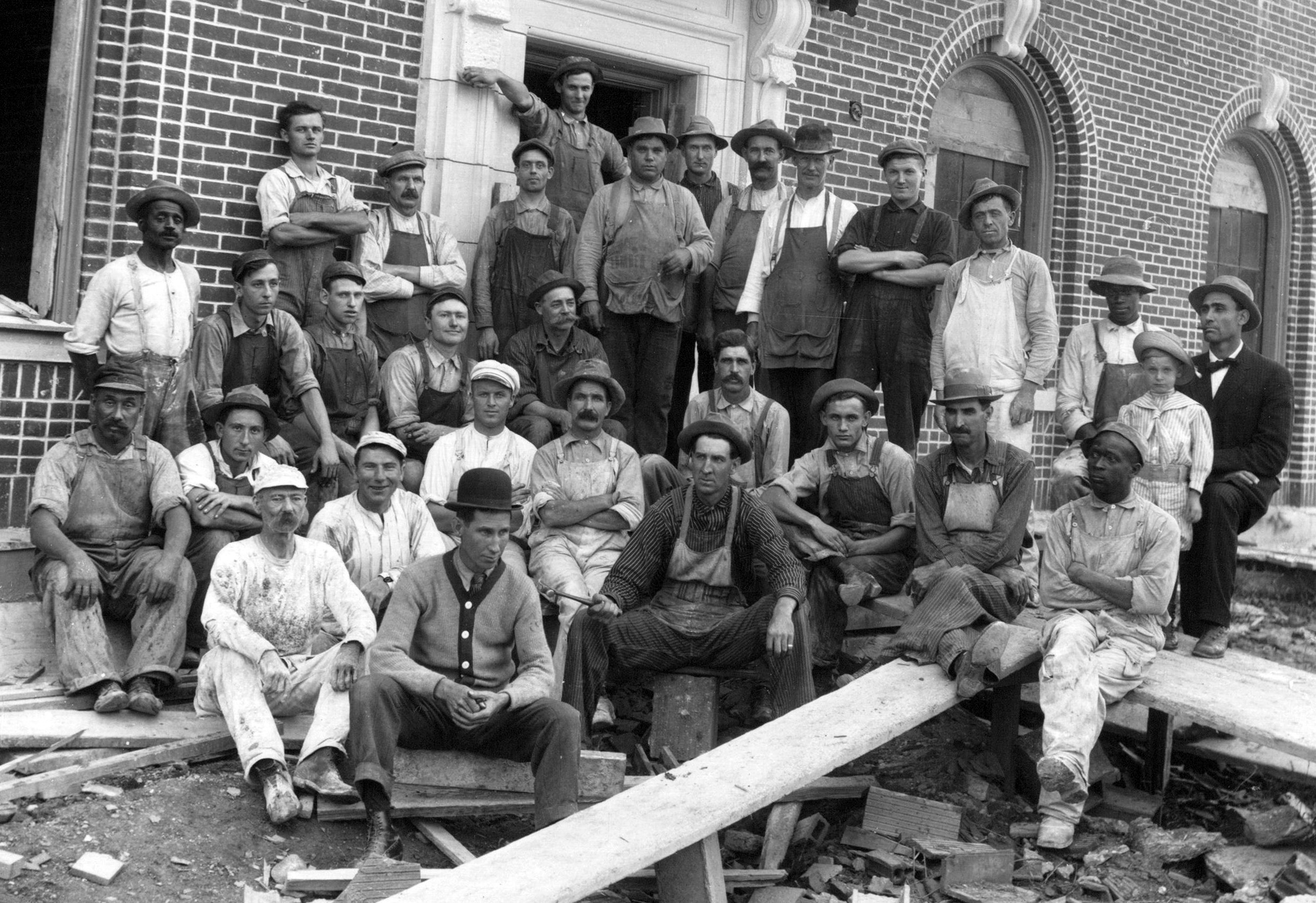
McGuffey Hall
McGuffey Hall was named for William H. McGuffey, a former board of trustees member, professor of languages, and local Presbyterian preacher. Additionally, McGuffey is nationally recognized through his creation of the McGuffey reader set. The readers were a set of picture books geared towards white rural schoolchildren, with the few images of African-Americans portraying them in working-class roles and “jumping for joy” because of their new freedom. The readers would go on to sell over 120 million copies, reaching a large audience and shaping racial stereotypes. McGuffey is also a confirmed slaveholder, found in the 1850 U.S Federal Census Slave Schedules, where 3 enslaved people were listed in his Charlottesville, Virginia, household. This included a 30-year-old man, a 28-year-old woman, and a 44-year-old woman. The first known person he enslaved was William Gibbons, a recognized community leader who later attended Howard University. McGuffey Hall was named in 1916, and a statue of his likeness outside the building was constructed in 1941. There is no mention of McGuffey’s participation in slavery at the hall or statue.