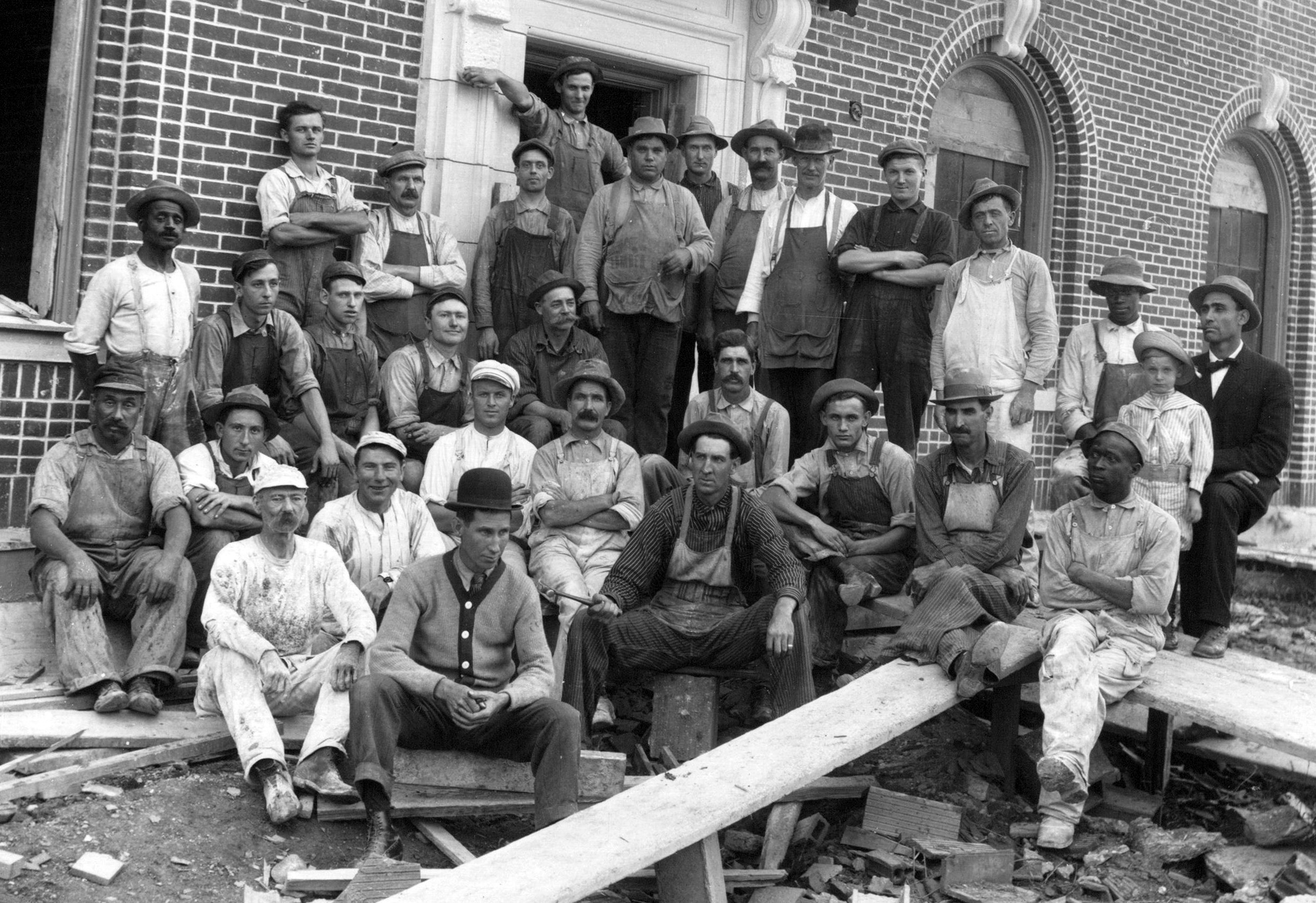
Students, University Leaders, and Campus Life
Debating Slavery: On and Off Miami’s Campus
This exhibit explores the discourse about slavery that took place both on the grounds of Miami University and in the town of Oxford. Students at both Western College and Miami University, as well as university leaders and community members, all took part in discussions about slavery as the nation wrestled with the issue in the Antebellum period. Overall, this exhibition provides an opportunity for Miami students, faculty, and alumni, as well as Oxford community members, to critically reflect on the varying debates of slavery and emancipation during the Antebellum period. The realities of the Antebellum period at Miami University call into question the university’s embrace of its long history and how it continues to acknowledge excellence.
Students Debate Slavery
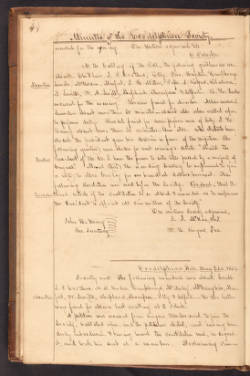
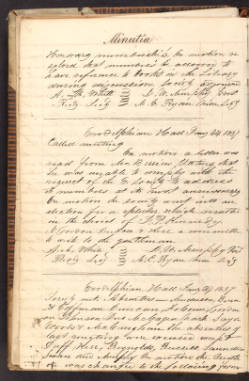
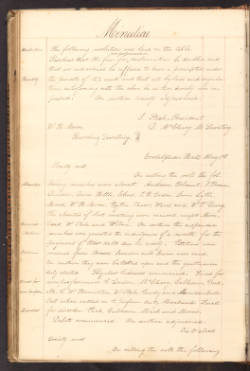
The central place for discussion on campus was in the academic building of Old Main, where two of the oldest student organizations, The Union Literary Society and the Erodelphian Literary Society, met. These groups held debates on a multitude of topics, including a number involving slavery. These discussions not only questioned the morality of slavery but also its political implications, from the representation of slaves in slave states to the presence of the African Colonization Society. Oftentimes, the students, many of whom came from the South, would side with pro-slavery causes in their debates. This exhibit showcases the meeting minutes from a few of the societies’ debates, where they mention slavery.
A President Responds
Along with these societies, university presidents, like George Junkin, also inserted themselves into the debate on slavery in Oxford. Junkin did so in his 1843 speech The Integrity of the Union vs Abolitionism. This speech was given at the Cincinnati Synod and was one of many debates at the time that were carried out in the religious spaces in Southwest Ohio. Presbyterian ministers shaped the university, from the curriculum to the freedoms enjoyed in debate. George Junkin and other ministers were common participants in debates about slavery, with some being staunch abolitionists, others being pro-slavery, and those whose opinions put them somewhere in the middle. These speeches, including Junkin’s, often cited different passages of the Bible to morally justify their arguments. Junkin’s speech, which is included in its entirety in this exhibit, was met with backlash from Miami alumni and would ultimately lead to his resignation.
Black Communities Debate
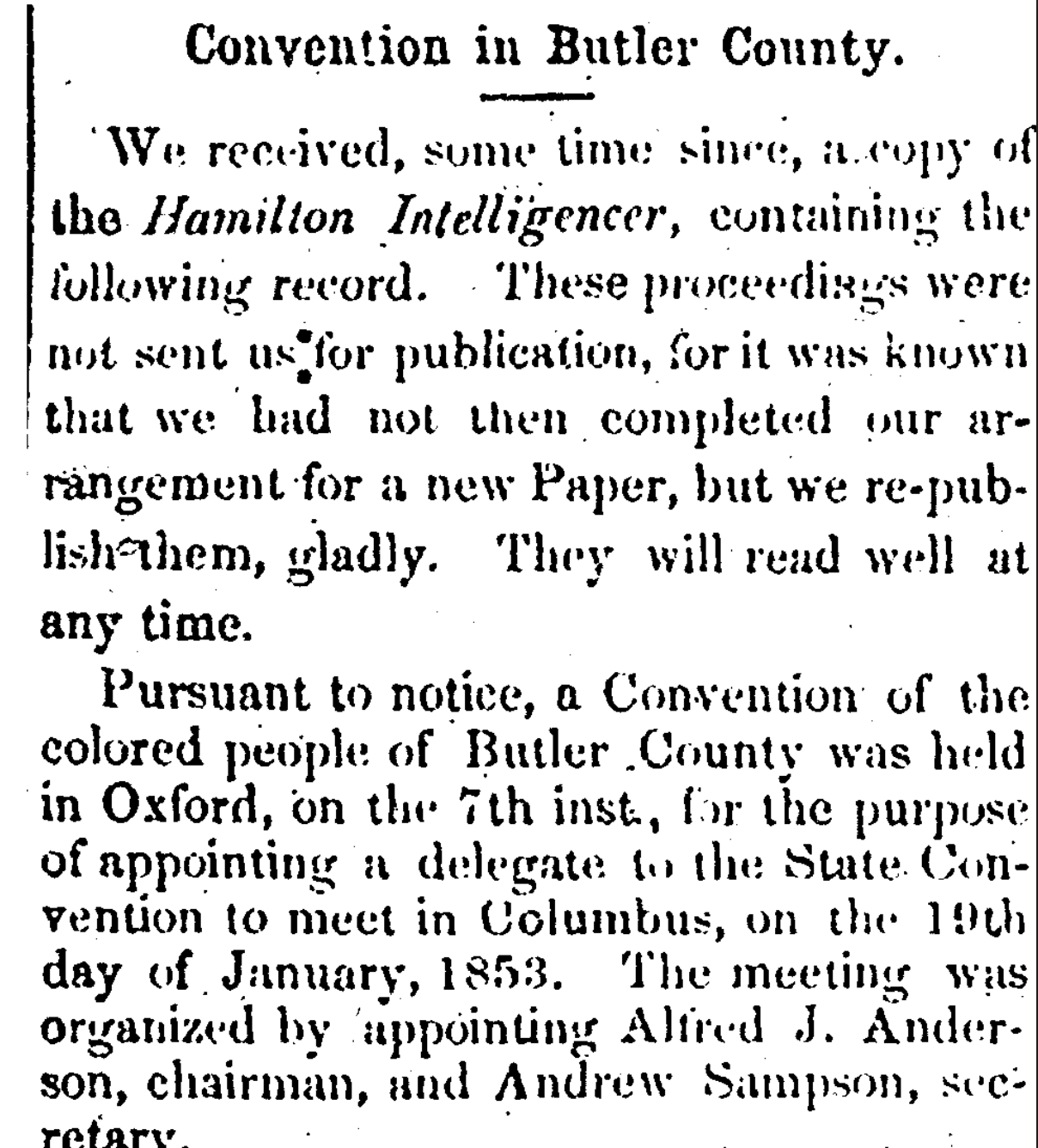
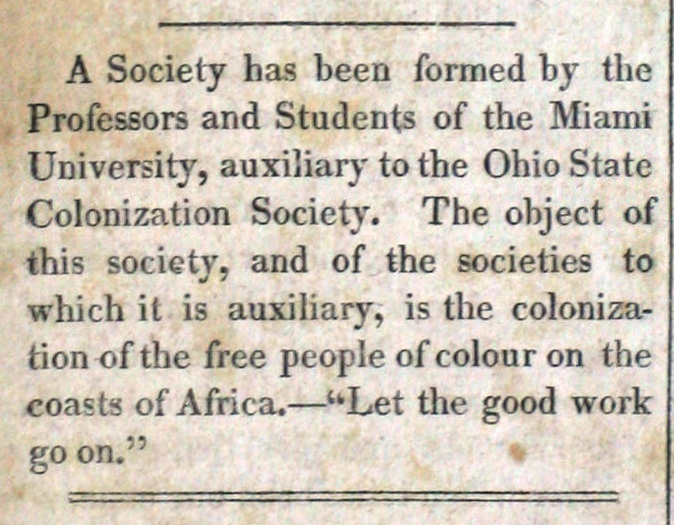
Furthermore, community members engaged in debate, particularly with the Black Convention of Oxford, and with the visit of Frederick Douglass in 1858. Members of the Black community in Oxford met to debate the issues that concerned abolitionism and the rights of free Black people. They also sent a delegate, Oxford’s own, A. Proctor, to the State Convention. One of the pronouncements of the Oxford convention was the denunciation of Colonization Societies that existed at the time, both locally and statewide. Miami University was host to a chapter of the American Colonization Society, founded in 1827, and among its membership were prominent members of the community like Robert Hamilton Bishop and William Holmes McGuffey, national leaders in their own right. Many of those who were and are considered abolitionists by the community and university were members of groups like the ACA, antithetical to the wishes of the Black community.
Citations
Davis, Virgil E. Literary Societies in "Old Miami" from 1825 to 1873. Oxford, Ohio: Miami University, 1950.
McLoughlin, Alessandra A. Love and Dishonor: Miami University and Slavery in the Antebellum Era. Oxford, Ohio: Miami University, 2021.